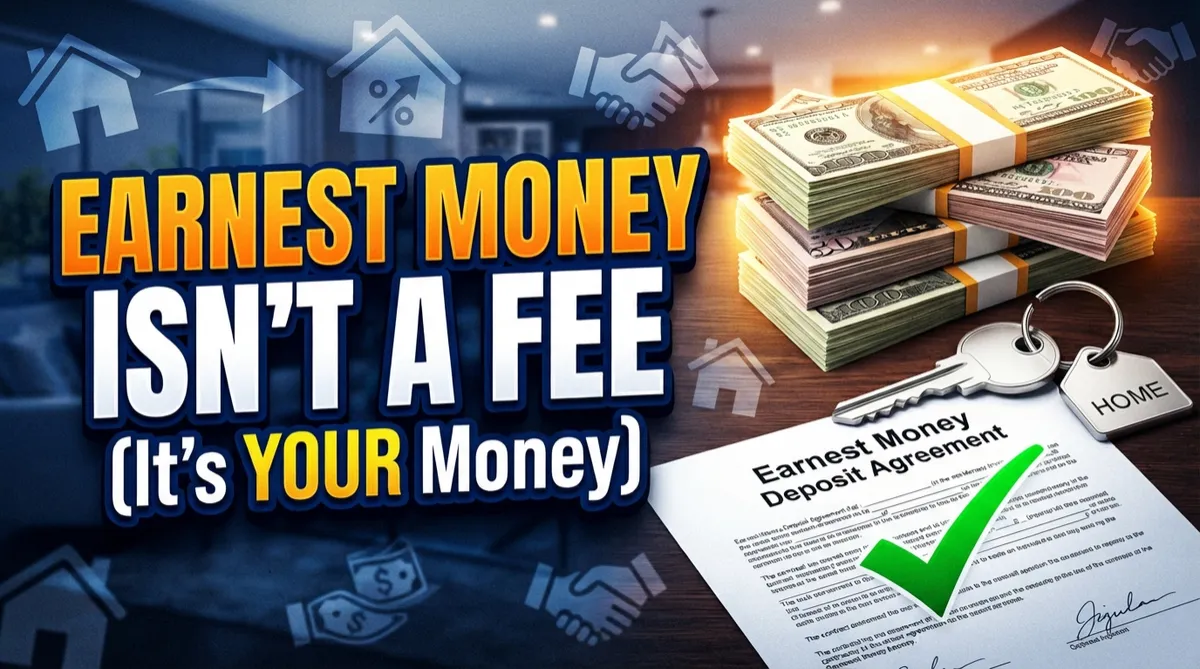
Earnest Money Isn't a Fee (It's YOUR Money)
Earnest Money Isn't a Fee (It's YOUR Money)
What Happens to Your Earnest Money?1
Why Buyers Should Pay Attention2
Watch: Earnest Money Isn't a Fee (It's YOUR Money)2
Buying a home comes with plenty of new terms, and earnest money is one that often causes confusion.
Here’s the simple truth: earnest money isn't a fee. It's your money.
Earnest money is a deposit you make to show the seller you're serious about purchasing the home. The amount can vary depending on the transaction and local practices.
What Happens to Your Earnest Money?
If the purchase moves forward, your earnest money is generally credited toward your closing costs or down payment. You aren't simply handing that money over to the seller.
Think of it as money that's already working toward your home purchase.
However, your contract matters. If the transaction doesn't close, whether you receive your earnest money back can depend on the reason for termination and the specific terms and contingencies in your agreement.
Why Buyers Should Pay Attention
Before making an earnest money deposit, understand:
How much you're putting down
Where the money will be held
What happens if the contract is terminated
Which contingencies protect your deposit
How the deposit will be applied at closing
Don't think of earnest money as another expense. Think of it as part of your homebuying funds—with contract terms determining what happens to it.
If you're navigating today's changing market, you may also want to read Mortgage Rate Whiplash: Speed Bump, Not a Wall and Homebuyer Plan for Gen Z & Millennials for more practical homebuying strategies.
The goal isn't just to buy a house. It's to understand where your money goes and make informed decisions every step of the way.
Buyer's Guide

Watch: Earnest Money Isn't a Fee (It's YOUR Money)
Bottom Line
Earnest money isn't simply a fee you pay to buy a home. It's your money being put toward the transaction. Know the contract, understand your contingencies, and make sure you know exactly what happens to your deposit before you sign.